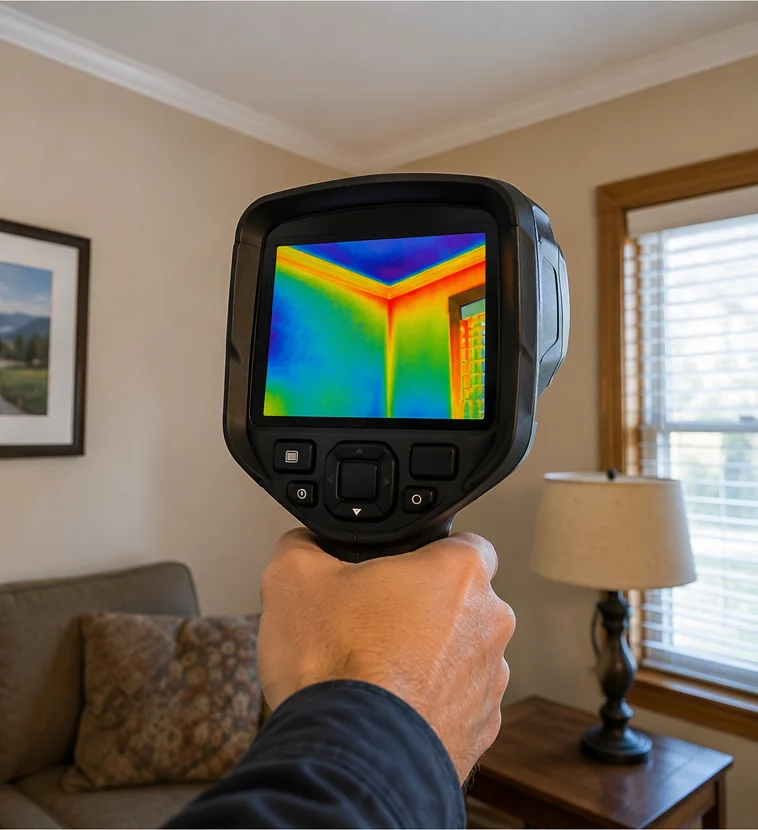
See the heat a flashlight can't
Infrared scanning reveals hidden moisture, missing insulation and overheating electrical connections behind finished surfaces — standard on every applicable system, no walls opened.
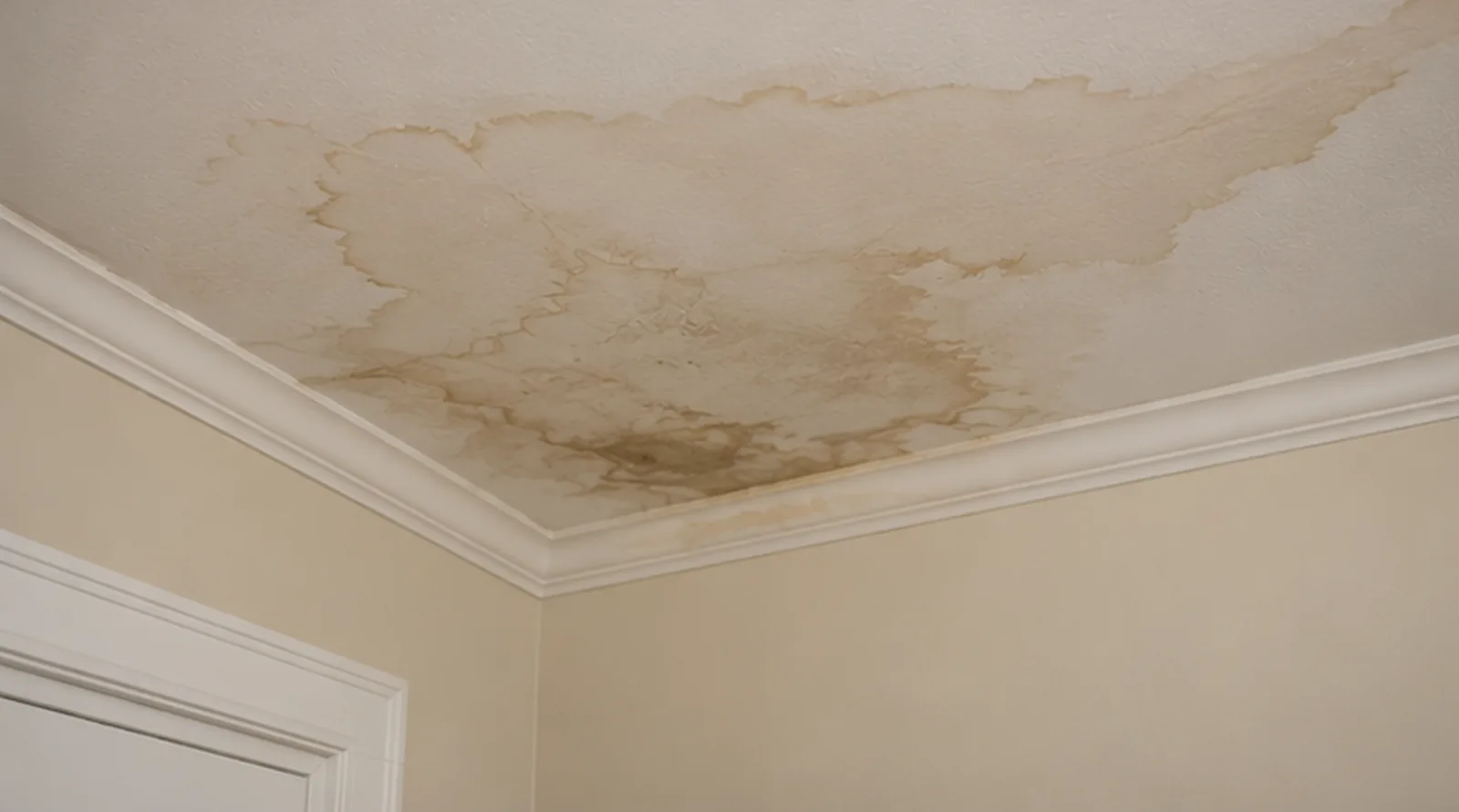
A finished wall hides almost everything that matters. Behind the drywall, a slow plumbing drip, an empty insulation cavity, or a loose breaker lug can sit for years with no visible sign — until the ceiling stains, the room never warms up, or the panel starts to scorch. A thermal (infrared) camera reads the surface temperature of those finishes and turns invisible energy differences into a picture you can act on.
How infrared works
Every surface radiates heat. The camera measures tiny temperature variations across a wall, ceiling or panel and maps them as cool blues and warm reds. A wet patch of drywall reads colder than the dry material around it because evaporation cools it; a missing batt of insulation lets interior heat bleed through and glows warm in winter; a corroded electrical connection runs hotter than its neighbors under load. None of these are visible to the eye, and none require us to open a single wall — the infrared image points us to exactly where to follow up with a moisture meter or a closer look.
Thermal imaging is not magic and it does not see through walls. It reads surfaces. That is why we always pair the camera with the rest of the toolkit — moisture metering to confirm a suspected leak, and a careful visual of the system itself. Used that way, it is one of the most useful instruments on a Hastings inspection, especially in the heating season when the temperature difference between inside and outside makes problems light up.
What we scan for
On every inspection where it applies, the camera goes to work on the systems most likely to hide a costly surprise:
- Hidden moisture and active leaks behind ceilings, around windows and under bathrooms
- Missing, settled or skipped insulation in walls and attic ceilings
- Overheating breakers, loose lugs and hot connections in the electrical panel
- Air leakage at rim joists, attic hatches and around recessed lights
- Radiant in-floor heating runs and gaps, where present
- Cold spots that flag the moisture paths behind roof and ice-dam damage
Why it matters in Hastings
Hastings is a city of two housing stocks, and thermal imaging earns its keep on both. Downtown and the older neighborhoods near the Mississippi are full of homes from the early 1900s — balloon-framed, often under-insulated, sometimes with insulation added piecemeal over a century. On those houses the camera tells a clear story: warm vertical stripes where heat escapes up open stud bays, cold pockets where a wall cavity is simply empty. That same heat loss is what drives the ice dams Dakota County roofs are known for, where escaping warmth melts snow that refreezes at the eave and pushes water back under the shingles.
Newer construction on the bluffs and in the developments south of town has its own failure points — a poorly sealed rim joist, a bathroom exhaust dumping moist air into the attic, a plumbing connection weeping behind a finished basement wall. Because Hastings sits in EPA radon Zone 1 and many of these homes have finished lower levels, a quiet leak can run for a long time before anyone notices. The cold winters here are an advantage: the bigger the gap between indoor and outdoor temperature, the sharper the contrast the camera reads, which is why a Minnesota infrared scan is often more revealing than the same scan in a mild climate. Anything the camera flags is documented in your report — delivered within 24 hours — alongside the rest of the findings, following the InterNACHI Standards of Practice.
Thermal imaging pairs naturally with our radon testing and moisture work, giving you a complete picture of the systems that are hardest to judge from a walkthrough alone.